
Understanding the Risks of Prescription Medication Misuse
At Addiction Treatment Montreal, we specialize in helping individuals recover from the misuse and dependence of prescription medication. While these medications are commonly prescribed for legitimate health concerns such as anxiety, pain, or ADHD, they also carry a high potential for abuse, addiction, and serious health complications.
Category 1: Depressants
Used to treat anxiety and sleep disorders
Depressants, a broad class of prescription medication, slow brain activity and are often prescribed for anxiety, panic disorders, and insomnia. This category includes:
-
Barbiturates: Amytal, Nembutal, Seconal, Phenobarbital (street names: barbs, reds, red birds, phennies, tooies, yellows, yellow jackets)
-
Benzodiazepines: Ativan, Halcion, Librium, Valium, Xanax (street names: candy, downers, tranks, sleeping pills)
-
Flunitrazepam (Rohypnol): Also known as roofies, R2, Mexican Valium; frequently linked to drug-facilitated sexual assault (NIH)
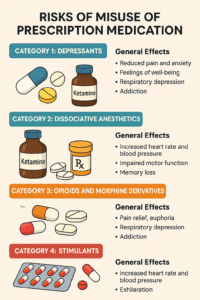
General effects of depressants include pain relief, reduced anxiety, and feelings of calm—but also sedation, confusion, slowed breathing and heart rate, and high risk of overdose. Long-term misuse of these prescription medications often leads to physical dependence and addiction.
Barbiturates may cause:
-
Sedation, dizziness, unusual excitement, poor judgment, fever, irritability
Benzodiazepines can lead to: -
Drowsiness, dizziness, memory issues
Flunitrazepam effects include: -
Memory loss, blurred vision, gastrointestinal distress, and urinary retention
If you or a loved one is misusing prescription depressants, explore our Outpatient Treatment Options for customized support.
Category 2: Dissociative Anesthetics
Ketamine (Ketalar SV), often referred to as Special K or Cat Valium, is a prescription medication originally used for anesthesia. Misuse of ketamine can cause:
-
Increased blood pressure and heart rate
-
Numbness, memory impairment, nausea, and vomiting
These dissociatives can distort perception and cause hallucinations, which may lead to dangerous behaviours or trauma. Read more about Hallucinogen Addiction and how we treat it.
Category 3: Opioids and Morphine Derivatives
Prescribed primarily for pain management
Opioids are among the most frequently abused types of prescription medication. Common forms include:
-
Codeine: Empirin with Codeine, Robitussin A-C, Tylenol with Codeine (street: Captain Cody, schoolboy)
-
Fentanyl: Actiq, Duragesic (street: China White, TNT, Apache)
-
Morphine: Roxanol, Duramorph (street: M, Miss Emma)
-
Others: OxyContin, Percocet, Demerol, Dilaudid, Vicodin
These medications offer powerful pain relief but also come with high risk for tolerance, physical dependence, and fatal overdose. According to Health Canada, opioid-related deaths continue to rise nationwide.
Common side effects include:
-
Euphoria and pain relief
-
Respiratory depression
-
Constipation, nausea, confusion
-
Sedation, unconsciousness, coma
Learn more about Opioid Addiction Treatment and our medically-supported recovery programs.
Category 4: Stimulants
Prescribed to treat ADHD and narcolepsy
Stimulant medications, while beneficial for treating attention and wakefulness disorders, are often misused for performance enhancement or recreation. Commonly misused stimulants include:
-
Amphetamines: Biphetamine, Dexedrine (street: speed, bennies, truck drivers)
-
Cocaine: Although illegal, sometimes compared to prescription stimulants
-
Methamphetamines: Desoxyn (street: crystal, meth, ice)
-
Methylphenidate: Ritalin (street: vitamin R, Skippy, smart drug)
Stimulant misuse causes a rapid increase in dopamine levels, leading to euphoria, hyperactivity, and increased alertness—but also cardiovascular issues, paranoia, aggression, and in extreme cases, psychosis or stroke (CAMH).
Side effects of stimulant abuse include:
-
Irregular heartbeat
-
Elevated blood pressure
-
Weight loss and malnutrition
-
Sleep disorders and anxiety
Find out how our Prescription Drug Rehab can help you regain control.
Taking Action Against Prescription Medication Misuse
At Addiction Treatment Montreal, our clinical team offers personalized, evidence-based care for clients struggling with the misuse of prescription medications. Whether you are dealing with opioid dependence, stimulant misuse, or benzodiazepine withdrawal, we provide:
-
Individual and group therapy
-
Medical detox referrals
-
Mental health support for co-occurring disorders
-
Family involvement and intervention services (learn more)
All treatment plans are tailored to address the unique risks and symptoms associated with specific types of prescription medication.
If you or a loved one is struggling, contact us today to begin a safe and supported recovery journey.